Mouse Secondary Antibodies
- (1)
- (12)
- (101)
- (1,229)
- (55)
- (7)
- (1)
- (2)
- (1)
- (1)
- (1)
- (262)
- (108)
- (147)
- (11)
- (110)
- (1)
- (50)
- (102)
- (25)
- (163)
- (22)
- (8)
- (1)
- (3)
- (10)
- (82)
- (38)
- (10)
- (2)
- (1)
- (1)
- (21)
- (8)
- (16)
- (25)
- (5)
- (75)
- (2)
- (31)
- (58)
- (1)
- (4)
- (1)
- (97)
- (51)
- (3)
- (9)
- (9)
- (16)
- (1)
- (11)
- (32)
- (40)
- (2)
- (711)
- (5)
- (17)
- (60)
- (15)
- (2)
- (1)
- (78)
- (292)
- (18)
- (1)
- (41)
- (17)
- (2)
- (12)
- (7)
- (2)
- (1)
- (138)
- (757)
- (190)
- (4)
- (9)
- (1)
- (5)
- (110)
- (44)
- (69)
- (28)
- (11)
- (6)
- (1)
- (15)
- (1)
- (1)
- (1)
- (1)
- (3)
- (1,163)
- (111)
- (104)
Filtered Search Results
Biotium TNF alpha(TNFA/1172), 0.2mg/mL
This MAb recognizes human 17-26 kDa protein, which is identified as cytokine TNF-alpha (Tumor Necrosis Factor-alpha). TNF-alpha can be expressed as a 17 kDa free molecule, or as a 26 kDa membrane protein. TNF-alpha is a protein secreted by lipopolysaccharide-stimulated macrophages, and causes tumor necrosis when injected into tumor bearing mice. TNF alpha causes cytolysis of certain transformed cells, being synergistic with interferon gamma in its cytotoxicity. Although it has little effect on many cultured normal human cells, TNF alpha appears to be directly toxic to vascular endothelial cells. Other actions of TNF alpha include stimulating growth of human fibroblasts and other cell lines, activating polymorphonuclear neutrophils and osteoclasts, and induction of interleukin 1, prostaglandin E2 and collagenase production. TNF alpha is currently being evaluated in treatment of certain cancers and AIDS Related Complex.This antibody is available purified with BSA/azide at 200 ug/mL,
Non-distribution item offered as a customer accommodation; additional freight charges may apply.
Learn More
ABclonal Technology WDR77 Mouse mAb
Small and Specialty Supplier Partner
Small and/or specialty supplier based on Federal laws and SBA requirements.
Learn More
Small and/or specialty supplier based on Federal laws and SBA requirements.
Learn More
The protein encoded by this gene is an androgen receptor coactivator that forms a complex with protein arginine methyltransferase 5, which modifies specific arginines to dimethylarginines in several spliceosomal Sm proteins. The encoded protein may be involved in the early stages of prostate cancer, with most of the protein being nuclear-localized in benign cells but cytoplasmic in cancer cells. Several transcript variants encoding different isoforms have been found for this gene.
Non-distribution item offered as a customer accommodation; additional freight charges may apply.
Learn More
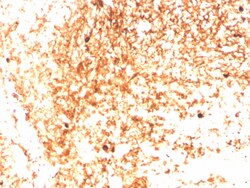
Biotium Tyrosinase-Related Protein-1 (TYRP-1) (Melanoma Marker)(TYRP1/3283), CF568 conjugate, 0.1mg/mL
Reacts with a 75 kDa melanocyte-specific gene product, identified as Tyrosinase-related protein-1 (TRP-1). It is involved in melanin synthesis. TRP1 is present on the melanosomal membranes of melanoma, normal melanocytes and nevi. Recent evidence suggests that TRP-1 is involved in maintaining stability of tyrosinase protein and modulating its catalytic activity. TRP-1 is also involved in maintenance of melanosome ultrastructure and affects melanocyte proliferation and cell death. Primary antibodies are available purified, or with a selection of fluorescent CF Dyes and other labels. CF Dyes offer exceptional brightness and photostability. Note: Conjugates of blue fluorescent dyes like CF405S and CF405M are not recommended for detecting low abundance targets, because blue dyes have lower fluorescence and can give higher non-specific background than other dye colors.
Non-distribution item offered as a customer accommodation; additional freight charges may apply.
Learn More
Biotium BCL10 (MALT-Lymphoma Marker) (BL10/2988R), CF488A conjugate, 0.1mg/mL
B-cell lymphoma/leukemia 10 (BCL10) is a signaling protein that promotes apoptosis, pro-caspase-9 maturation, and activation of NF-kappa-B via NIK and IKK. BCL10 contains an N-terminal caspase recruitment domain (CARD), which is found in a number of apoptotic regulatory molecules. BCL10 is involved in the adaptive immune response, and may be an adapter protein between upstream TNFR1-TRADD-RIP complex and the downstream NIK-IKK-IKAP complex. A BCL10 translocation is recurrent in low-grade mucosa-associated lymphoid tissue (MALT lymphoma).Primary antibodies are available purified, or with a selection of fluorescent CF Dyes and other labels. CF Dyes offer exceptional brightness and photostability. Note: Conjugates of blue fluorescent dyes like CF405S and CF405M are not recommended for detecting low abundance targets, because blue dyes have lower fluorescence and can give higher non-specific background than other dye colors.
Non-distribution item offered as a customer accommodation; additional freight charges may apply.
Learn More
Biotium C1QB / Complement C1q B-Chain(C1QB/2965), CF568 conjugate, 0.1mg/mL
Complement C1q B Chain (C1qb) is a subunit of C1q. C1q is composed of 6 polypeptide chains each of C1qa, C1qb, and C1qc. C1q is a component of the classical complement pathway, and thereby plays an important role in the immune response. Each C1q subunit contains an N-terminal collagen-like region and a C-terminal C1q globular domain. The presence of receptors for C1q on effector cells modulates its activity, which may be antibody-dependent or independent. Macrophages are the primary source of C1q, while anti-inflammatory drugs as well as cytokines differentially regulate expression of the mRNA as well as the protein. C1q deficiency is associated with lupus erythematosus and glomerulonephritis. Primary antibodies are available purified, or with a selection of fluorescent CF Dyes and other labels. CF Dyes offer exceptional brightness and photostability. Note: Conjugates of blue fluorescent dyes like CF405S and CF405M are not recommended for detecting low abundance targets,
Non-distribution item offered as a customer accommodation; additional freight charges may apply.
Learn More
Biotium Progesterone Receptor (Marker of Progestin Dependence)(PGR/2694), CF488A conjugate, 0.1mg/mL
This MAb is specific to progesterone receptor and shows minimal cross-reaction with other members of the family. Progesterone receptor is expressed as two major isoforms, PR-A (81 kDa) and PR-B (116 kDa). Expression of PgR has been suggested to reflect a intact estrogen regulatory machinery and therefore, predict better clinical response to endocrine therapy than estrogen receptor (ER) alone. This MAb is excellent for immunohistochemical staining of formalin-fixed tissues. Primary antibodies are available purified, or with a selection of fluorescent CF Dyes and other labels. CF Dyes offer exceptional brightness and photostability. Note: Conjugates of blue fluorescent dyes like CF405S and CF405M are not recommended for detecting low abundance targets, because blue dyes have lower fluorescence and can give higher non-specific background than other dye colors.
Non-distribution item offered as a customer accommodation; additional freight charges may apply.
Learn More
Biotium CD73 (Immuno-Oncology Target)(NT5E/2646), CF488A conjugate, 0.1mg/mL
CD73 is a membrane-bound extracellular enzyme overexpressed in several cancer types. Its expression has been linked to poor prognosis in melanoma, colorectal, gastric, triple negative breast cancer, and to a pro-metastatic phenotype in prostate cancer. Together with CD39, it plays a major role in promoting immunosuppression through the pathway degrading adenosine triphosphate (ATP) into adenosine. Within the tumor microenvironment, ATP promotes immune cell-mediated killing of cancer cells. In contrast, adenosine accumulation causes immune suppression, dysregulation of immune cell infiltrates and stimulates angiogenesis resulting in tumor spreading. CD73 is active on the last step of the degradation pathway, where it is the enzyme that actually degrades AMP into adenosine. CD73-blockade promotes anti-tumor immunity by reducing adenosine accumulation. Accordingly, anti-CD73 mAbs stimulate anti-tumor immunity and reduce tumor metastasis in Mouse tumor models, and could enhance t
Non-distribution item offered as a customer accommodation; additional freight charges may apply.
Learn More
Biotium Napsin A (Lung Adenocarcinoma Marker)(NAPSA/3308), CF647 conjugate, 0.1mg/mL
Napsin is a pepsin-like aspartic proteinase connected with maturation of surfactant protein B. There are two closely related napsins, napsin A and napsin B. Napsin A is expressed as a single chain protein. Immunohistochemical studies revealed high expression levels of napsin A in human lung and kidney but low expression in spleen. Napsin A is expressed in type II pneumocytes and in adenocarcinomas of lung. The high specificity expression of napsin A in adenocarcinomas of lung is useful to distinguish primary lung adenocarcinomas from adenocarcinomas of other organs. Primary antibodies are available purified, or with a selection of fluorescent CF Dyes and other labels. CF Dyes offer exceptional brightness and photostability. Note: Conjugates of blue fluorescent dyes like CF405S and CF405M are not recommended for detecting low abundance targets, because blue dyes have lower fluorescence and can give higher non-specific background than other dye colors.
Non-distribution item offered as a customer accommodation; additional freight charges may apply.
Learn More
Biotium Mucin 1 / EMA / Episialin / CD227(139H2), CF740 conjugate, 0.1mg/mL
This MAb reacts with MUC1. The dominant epitope of this MAb has not yet been determined. MUC1 is a large cell surface mucin glycoprotein expressed by most glandular and ductal epithelial cells and some hematopoietic cell lineages. It is expressed on most secretory epithelium, including mammary gland and some hematopoietic cells. It is expressed abundantly in lactating mammary glands and over expressed abundantly in >90% breast carcinomas and metastases. Transgenic MUC1 has been shown to associate with all four c-erbB receptors and localize with c-erbB1 (EGFR) in lactating glands. The MUC1 gene contains seven exons and produces several different alternatively spliced variants. The major expressed form of MUC1 uses all seven exons and is a type 1 transmembrane protein with a large extracellular tandem repeat domain. The tandem repeat domain is highly O glycosylated and alterations in glycosylation have been shown in epithelial cancer cells. Antibody to EMA is useful as a pan-ep
Non-distribution item offered as a customer accommodation; additional freight charges may apply.
Learn More
Biotium NKX2.8(NKX28/3233R), CF488A conjugate, 0.1mg/mL
The protein encoded by this gene is a homeobox-containing developmental regulator associated with liver development. The encoded protein binds to the alpha-fetoprotein (AFP) gene promoter and increases the expression of AFP. This gene is overexpressed in some lung cancers and is linked to poor patient survival, possibly due to its resistance to cisplatin. This gene is aberrantly methylated in pancreatic cancer, deleted in squamous cell lung carcinomas, and acts as a tumor suppressor in esophageal cancer. Mutations in this gene may also be a cause of neural tube defects. Primary antibodies are available purified, or with a selection of fluorescent CF Dyes and other labels. CF Dyes offer exceptional brightness and photostability. Note: Conjugates of blue fluorescent dyes like CF405S and CF405M are not recommended for detecting low abundance targets, because blue dyes have lower fluorescence and can give higher non-specific background than other dye colors.
Non-distribution item offered as a customer accommodation; additional freight charges may apply.
Learn More
Biotium Drebrin 1 (DBN1)(DBN1/3393), Biotin conjugate, 0.1mg/mL
Drebrins (developmentally regulated brain proteins) are cytoplasmic proteins that bind F-actin in the brain and are involved in cell migration, extension of neuronal processes and plasticity of dendrites. There are three isoforms: two embryonic types (E1 and E2); and an adult type (A), generated by alternative RNA splicing from a single Drebrin gene. Drebrins are expressed mainly in brain neurons but are also found in skeletal muscle, heart, placenta, pancreas and kidney. Drebrin has been designated as a marker of the dendritic spine. Decreases in Drebrin levels in the brain have been been associated with Alzheimer's disease and Down syndrome. Primary antibodies are available purified, or with a selection of fluorescent CF Dyes and other labels. CF Dyes offer exceptional brightness and photostability. Note: Conjugates of blue fluorescent dyes like CF405S and CF405M are not recommended for detecting low abundance targets, because blue dyes have lower fluorescence and can
Non-distribution item offered as a customer accommodation; additional freight charges may apply.
Learn More
Biotium PAI-RBP1 / SERBP1 / SERPINE1(SERBP1/3495), 1mg/mL
PAI-RBP1 (plasminogen activator inhibitor 1 RNA-binding protein), also known as SERBP1 (SERPINE1 mRNA-binding protein 1), CGI-55, CHD3IP (chromodomain helicase DNA binding protein 3 interacting protein), HABP4L or PAI-RBP1, is a membrane-associated protein that localizes to the nucleus, the perinuclear region of the cytoplasm and the plasma membrane. PAI-RBP1 is believed to play a role in the regulation of mRNA stability, as it specifically binds to the CRS (cyclic nucleotide-responsive sequence) motif of the PAI-1 mRNA and acts to stabilize the mRNA and regulate its expression. In addition, PAI-RBP1 interacts with Mi2- and may be involved in chromatin remodeling. PAI-RBP1 also interacts with PGRMC1 and participates in the transduction of Progesterone's antiapoptotic action in ovarian cell types. The gene encoding PAI-RBP1 is overexpressed in ovarian cancer, suggesting a possible role for PAI-RBP1 in tumorigenesis and tumor metastasis. Primary antibodies are available purifie
Non-distribution item offered as a customer accommodation; additional freight charges may apply.
Learn More
Genscript Corporation PIVKA II 1C5 mAb Mouse
Protein Induced by Vitamin K Absence or Antagonist-II (PIVKA-II) also known as Des- -carboxy-prothrombin (DCP) is an abnormal form of prothrombin Normally the prothrombin s 10 glutamic acid residues (Glu) in the -carboxyglutamic acid (Gla) domain at positions 6 7 14 16 19 20 25 26 29 and 32 are -carboxylated to Gla by vitamin-K dependent - glutamyl carboxylase in the liver and then secreted into plasma In patients with hepatocellular carcinoma (HCC) -carboxylation of prothrombin is impaired so that PIVKA-II is formed instead of prothrombin PIVKA-II is considered as is an efficient biomarker specific for HCC
Non-distribution item offered as a customer accommodation; additional freight charges may apply.
Learn More
Biotium Uroplakin 1A (Urothelial Differentiation Marker)(UPK1A/2922), 0.2mg/mL
The protein encoded by this gene is a member of the transmembrane 4 superfamily, also known as the tetraspanin family. Most of these members are cell-surface proteins that are characterized by the presence of four hydrophobic domains. The proteins mediate signal transduction events that play a role in the regulation of cell development, activation, growth and motility. This encoded protein is found in the asymmetrical unit membrane (AUM) where it can complex with other transmembrane 4 superfamily proteins. It may play a role in normal bladder epithelial physiology, possibly in regulating membrane permeability of superficial umbrella cells or in stabilizing the apical membrane through AUM/cytoskeletal interactions. The protein may also play a role in tumor suppression. Primary antibodies are available purified, or with a selection of fluorescent CF Dyes and other labels. CF Dyes offer exceptional brightness and photostability. Note: Conjugates of blue fluorescent dyes like
Non-distribution item offered as a customer accommodation; additional freight charges may apply.
Learn More
Biotium GLUT-1 (Tumor Progression and Mesothelioma Marker)(GLUT1/3132R), CF647 conjugate, 0.1mg/mL
Recognizes a protein of 55 kDa, which is identified as GLUT-1. Glucose transporters are integral membrane glycoproteins involved in transporting glucose into most cells. There are many types of glucose transport carrier proteins, designated as Glut-1 to Glut-12. Glut-1 is a major glucose transporter in the mammalian blood-brain barrier. It is expressed in high density on the membranes of human erythrocytes and the brain capillaries that comprise the blood-brain barrier. Glut-1 is expressed at variable levels in many human tissues. Overexpression of Glut-1 has been linked to tumor progression or poor survival of patients with carcinomas of the colon, breast, cervical, lung, bladder and mesothelioma. Glut-1 is a sensitive and specific marker for the differentiation of malignant mesothelioma (positive) from reactive mesothelium (negative). Primary antibodies are available purified, or with a selection of fluorescent CF Dyes and other labels. CF Dyes offer exceptional brightnes
Non-distribution item offered as a customer accommodation; additional freight charges may apply.
Learn More